
Illustrations
Clear to cloudy hot Jupiters
December 14, 2015 · ESA/Hubble · HAT-P-12b , HAT-P-1b , HD 189733b , HD 209458b , WASP-12b , WASP-17b , WASP-19b…
This image shows an artist’s impression of the ten hot Jupiter exoplanets studied by David Sing and his colleagues. From top left to lower left these planets are WASP-12b, WASP-6b, WASP-31b, WASP-39b, HD 189733b, HAT-P-12b, WASP-17b, WASP-19b, HAT-P-1b and HD 209458b.
The images are to scale with each other. HAT-P-12b, the smallest of them, is approximately the size of Jupiter, while WASP-17b, the largest planet in the sample, is almost twice the size. The planets are also depicted with a variety of different cloud properties.
There is almost no information about the colours of the planets available, with the exception of HD 189733b, which became known as the blue planet ( heic1312 ).
The hottest planets within the sample are portrayed with a glowing night side. This effect is strongest on WASP-12b, the hottest exoplanet in the sample, but also visible on WASP-19b and WASP-17b. It is also known that several of the planets exhibit strong Rayleigh scattering . This effect causes the blue hue of the daytime sky and the reddening of the Sun at sunset on Earth. It is also visible as a blue edge on the planets WASP-6b, HD 189733b, HAT-P-12b, and HD 209458b.
The wind patterns shown on these ten planets, which resemble the visible structures on Jupiter, are based on theoretical models.
More illustrations
 Still from Hubblecast 90: The final frontierFebruary 9, 2016
 Infant star’s artistic outburstDecember 21, 2015
 Banner of the new Space Scoop webpageDecember 16, 2015
 Illustration showing gravitational lensing producing supernova imagesDecember 16, 2015
Artist’s Impression of “Hot Jupiter” ExoplanetsDecember 14, 2015
 Still from Hubblecast episode 89: Edwin HubbleDecember 10, 2015
 Screenshot of the October 2015 issue of ESA/Hubble Science NewsletterOctober 21, 2015
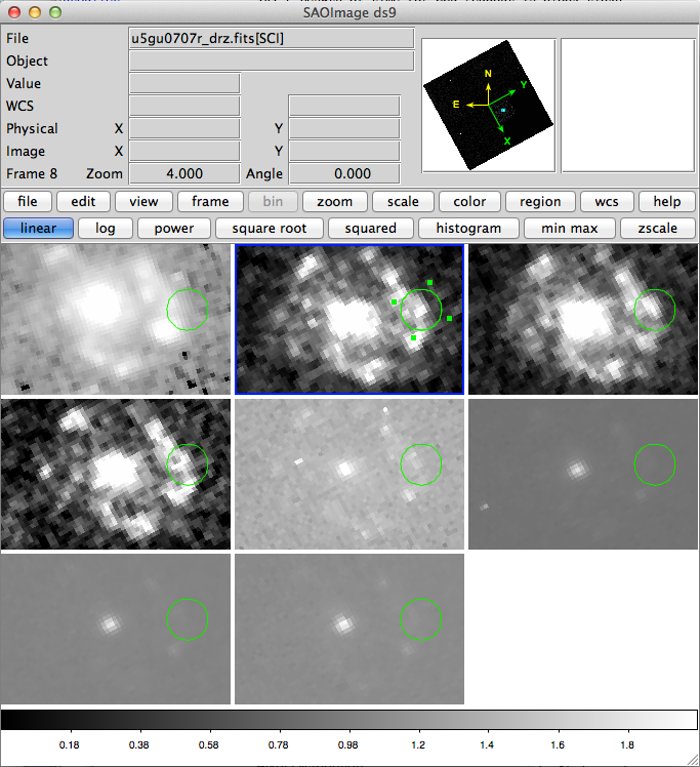 Hubble observations from NGC 7469 displayed in ds9October 21, 2015