Nebulae
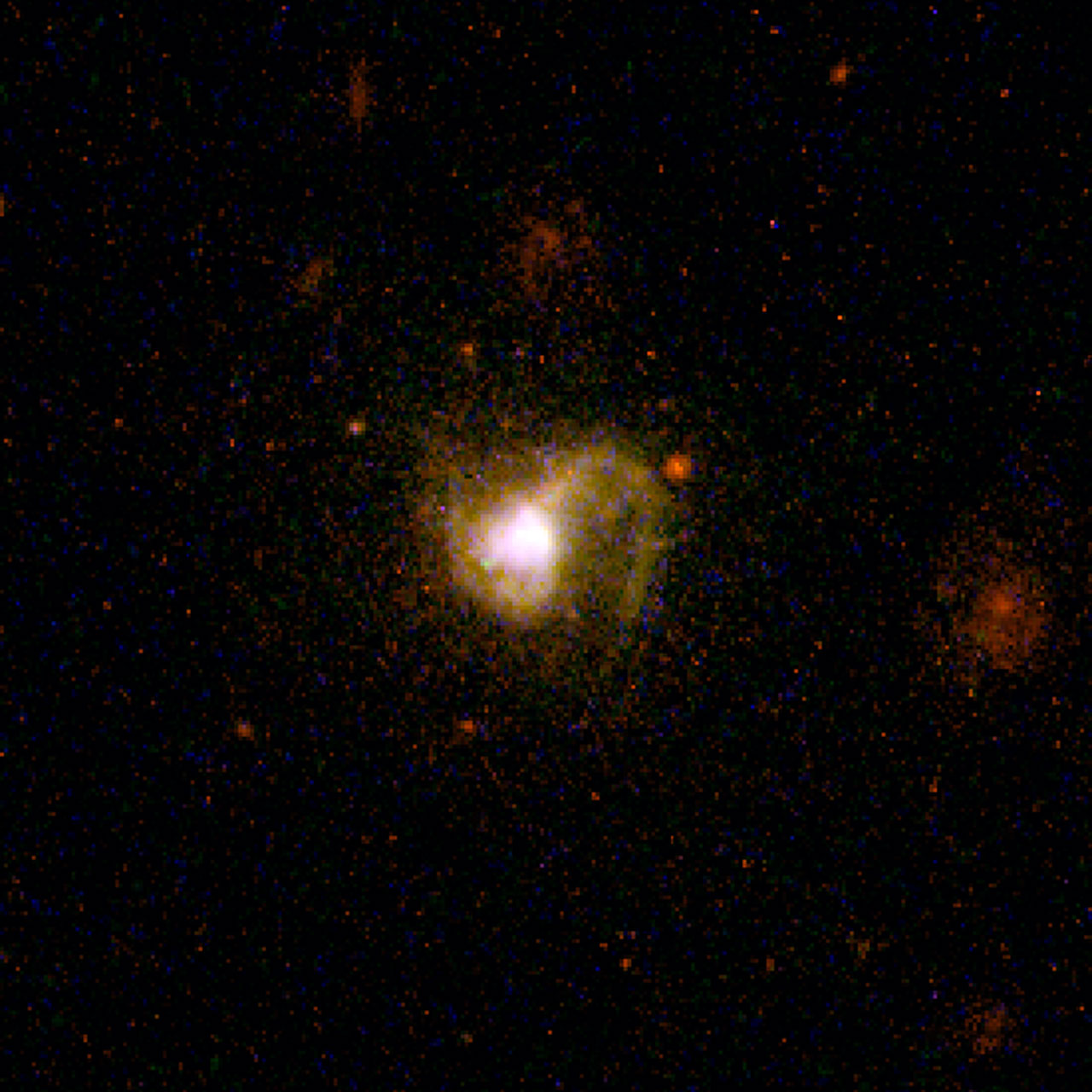
Dwarf Galaxy POX 186
December 19, 2002 · ESA/Hubble · PGC 046982 , POX 186 · Virgo
Zoom to full resolution See where it is in the 3D sky Original on ESA/Hubble ↗
New detailed images from the NASA / ESA Hubble Space Telescope show a 'late-blooming' galaxy, a small, distorted system of gas and stars that still appears to be in the process of development, even though most of its galactic cousins are believed to have started forming billions of years ago.
Evidence of the galaxy's youthfulness can be seen in the burst of newborn stars and its disturbed shape. This evidence indicates that the galaxy, called POX 186, formed when two smaller clumps of gas and stars collided less than 100 million years ago (a relatively recent event in the universe's 13-billion-year history), triggering more star formation. Most large galaxies, such as our Milky Way, are thought to have formed the bulk of their stars billions of years ago.
More from Virgo and nearby
 A galaxy spinning out of syncSeptember 18, 2026
 One-sided spiralJuly 24, 2026
 Galactic gas makes a getawayDecember 15, 2025
 Finding star clusters in the Lost GalaxyNovember 17, 2025
NGC 5335April 23, 2025
 Sombrero GalaxyApril 16, 2025
 A galaxy that gives great feedbackMarch 31, 2025
 A spiral and a starMarch 10, 2025