
Exoplanets
Hubble Infrared View of Extrasolar Planet Candidate
January 10, 2005 · NASA · 2M1207, 2MASSWJ 1207334-393254 · Hydra
Zoom to full resolution See where it is in the 3D sky Original on NASA ↗
This is an artificial-color Hubble Near Infrared Camera and Multi-Object Spectrometer (NICMOS) infrared-light view of the brown dwarf star 2MASSWJ 1207334-393254 (aka 2M1207) and giant planet companion candidate. The possible companion, estimated to be about five times the mass of Jupiter, is the magenta colored spot at lower right. The brown dwarf's location is within the circle at image center. The glare of the dwarf, which is 700 times brighter than the planet candidate (as seen at Hubble's near-infrared sensitivity) has been greatly reduced through image processing of NICMOS pictures taken at different Hubble orientations. In this picture the dwarf and candidate planet are at a minimum distance of 5 billion miles apart. Further observations will be needed to confirm that the two objects are gravitationally bound. The red, green, and blue colors correspond to infrared wavelengths of (1.6, 1.1, and 0.9 microns respectively). At a temperature of only 1800 degrees Fahrenheit, the candidate companion object appears very red in the NICMOS images.
About the data
The Hubble image was created from HST data from proposal 10176 . The science team is composed of: NASA, ESA, G. Schneider (Steward Observatory, Univ. of Arizona), I. Song (Gemini Observ.), B. Zuckerman, E. Becklin (Univ. of California, Los Angeles), P. Lowrance (California Inst. of Technology), B. Macintosh (Lawrence Livermore National Laboratory), M. Bessell (Australian National Univ.), and C. Dumas and G. Chauvin (European Southern Observ.).
More Hubble images of 2M1207, 2MASSWJ 1207334-393254
 HST/NICMOS Images of 2M1207 and GPCC at Three Near-Infrared WavelengthsJanuary 10, 2005
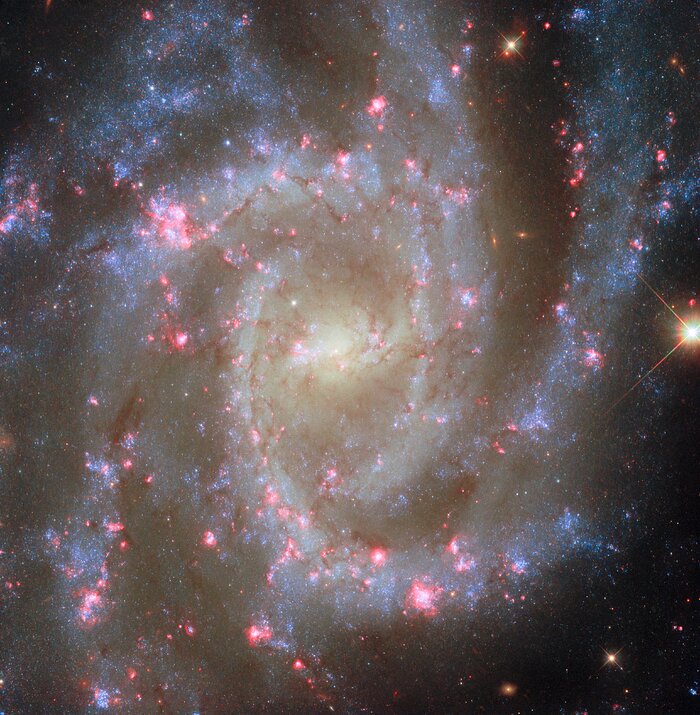 Noteworthy nearby spiralAugust 18, 2025
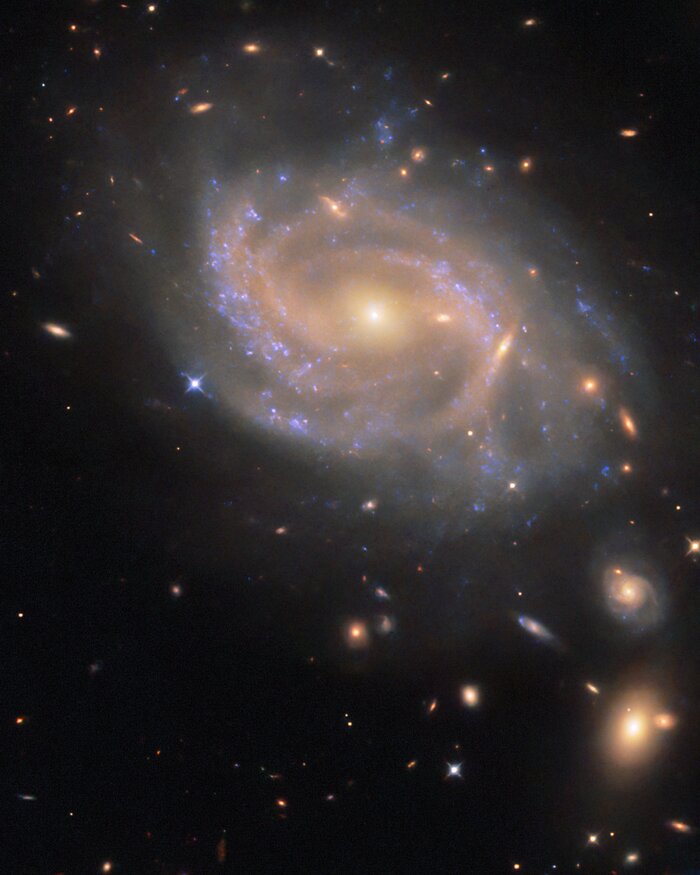 Swirling spiral in HydraJuly 21, 2025
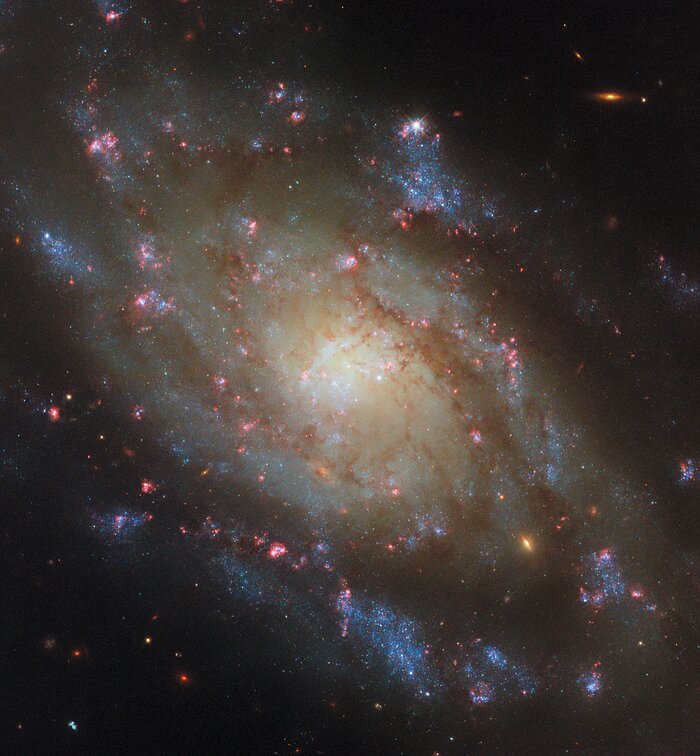 A spiral of the water snakeMarch 3, 2025
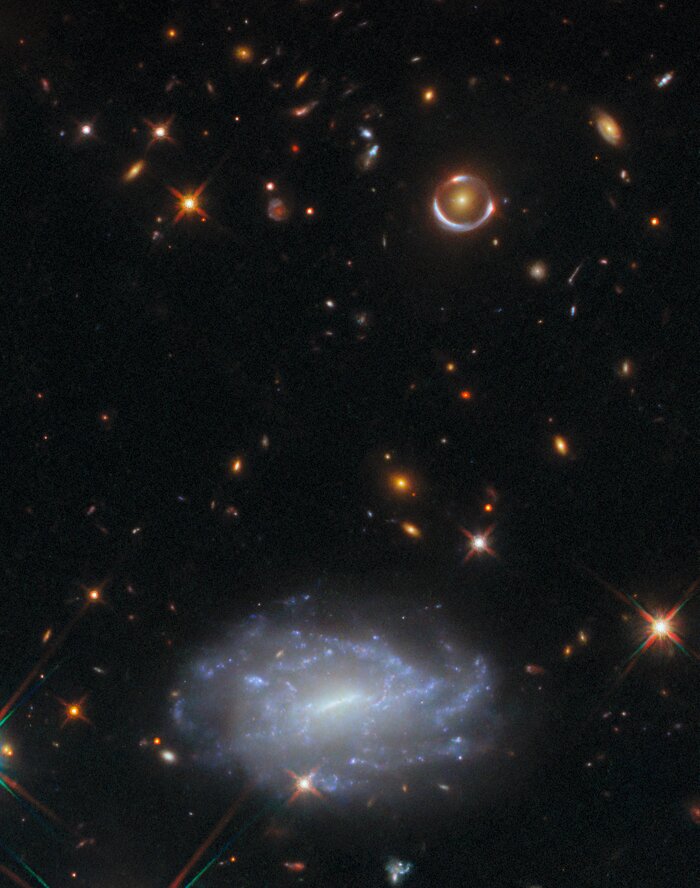 Ringing in the new yearJanuary 6, 2025
 Sighting forbidden lightDecember 18, 2023
TW Hydrae DiskMay 4, 2023
“Peekaboo” Dwarf Galaxy HIPASS J1131–31December 6, 2022