
Star clusters
Hubble Observations of Massive Stars in the Large Magellanic Cloud
May 11, 2010 · NASA · 30 Dor #016 · Dorado
Zoom to full resolution See where it is in the 3D sky Original on NASA ↗
This is the Hubble Space Telescope Cosmic Origins Spectrograph (COS) observation of 30 Dor #016 compared with one by the Hubble Space Telescope Imaging Spectrograph (STIS) of the similar star HDE 269810, also in the Large Magellanic Cloud.
The stellar-wind features of helium, carbon, oxygen, and nitrogen are identified by their chemical symbols above; the roman numerals indicate the ionization stages, i.e., the number of electrons removed plus one. ("I" would indicate the neutral atom.) The broad emission components plus blue-shifted absorption are diagnostics of the stellar winds; the absorption forms along the line of sight to the stellar disk, where the wind is approaching us at its full speed. The O V line is a unique feature of the hottest (O2-O3) stars.
The science figure is from C. Evans (Royal Observatory Edinburgh) and his runaway star research team's study, published on May 5, 2010 in the online issue of The Astrophysical Journal Letters.
About the data
The 30 Doradus "runaway" star study is based on Hubble COS data from proposal 11484 : G. Hartig (STScI), T. Delker (Ball Aerospace), C. Keyes (STScI), D. Sahnow (Johns Hopkins University), and S. Osterman (University of Colorado, Boulder).
Authors of the 30 Doradus "runaway" star science paper: C. Evans (UK Astronomy Technology Center/Royal Observatory Edinburgh), N. Walborn (STScI), P. Crowther (University of Sheffield, UK), V. Hénault-Brunet (University of Edinburgh/Royal Observatory Edinburgh), D. Massa (STScI), W. Taylor (University of Edinburgh/Royal Observatory Edinburgh), I. Howarth (University College London), H. Sana (European Southern Observatory, Santiago, Chile/University of Amsterdam), D. Lennon (STScI), and J. van Loon (Keele University, UK).
More Hubble images of 30 Dor #016
Hubble/WFPC2 and ESO/2.2-m Composite Image of 30 Dor Runaway StarMay 11, 2010
Massive Star is Ejected from a Young Star ClusterMay 11, 2010
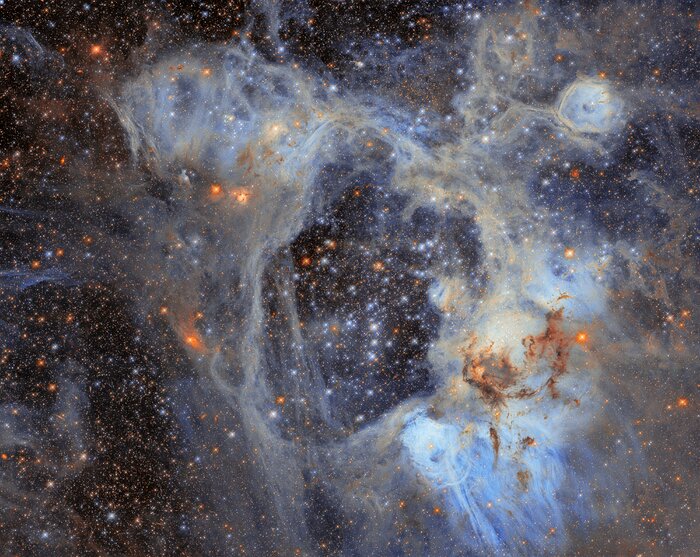 A superbubble sceneSeptember 3, 2026
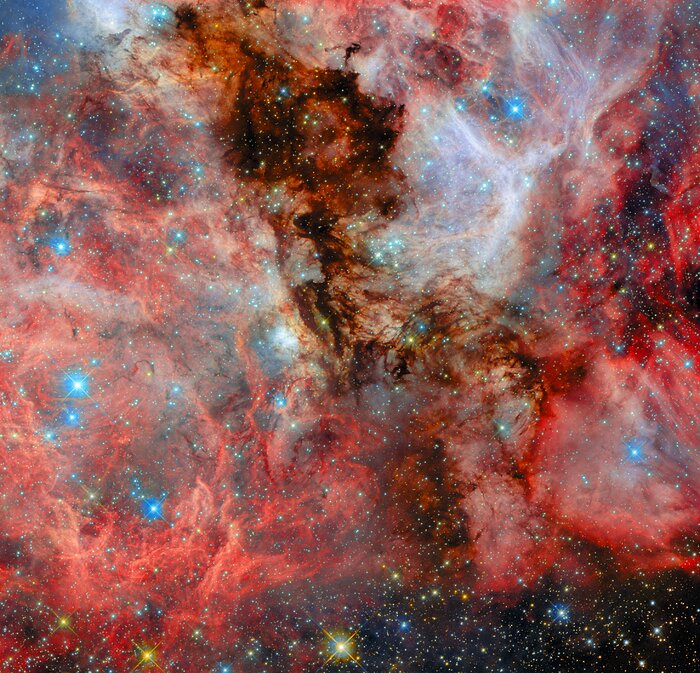 A neighbouring vista of stellar birthDecember 29, 2025
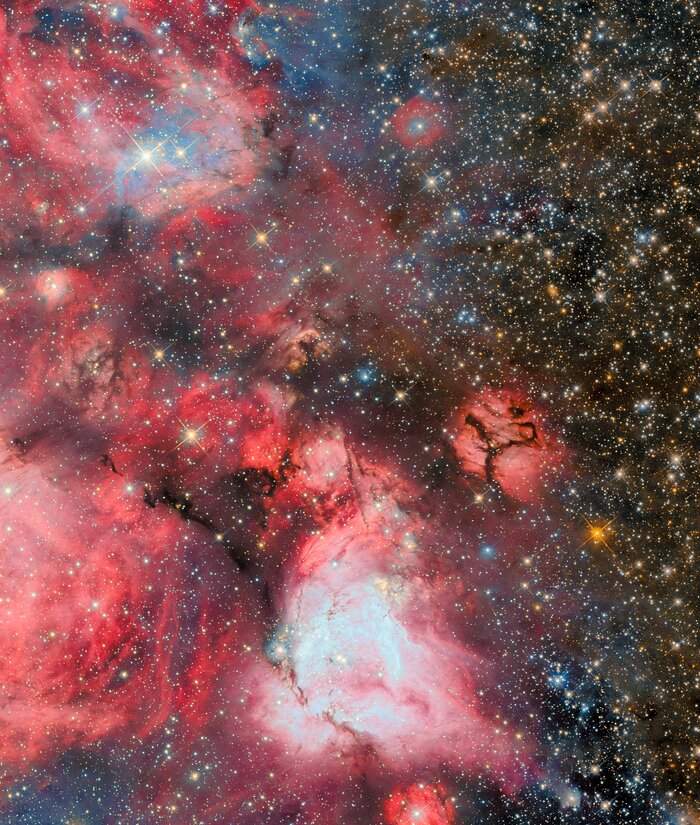 Baby stars blowing bubblesNovember 24, 2025
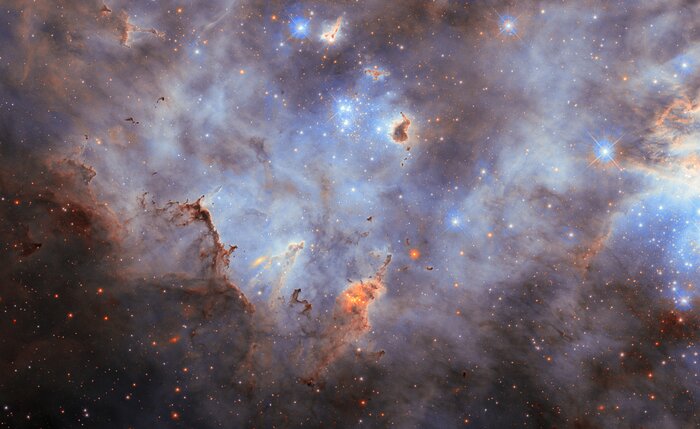 Cloudy clusterSeptember 8, 2025
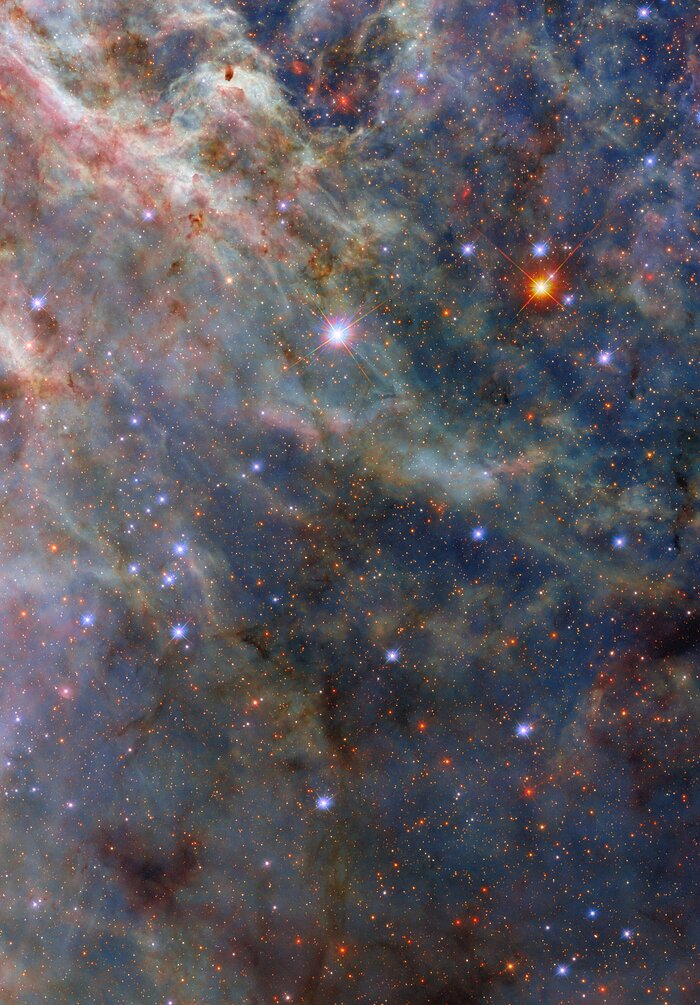 A sea monster and a TarantulaAugust 4, 2025
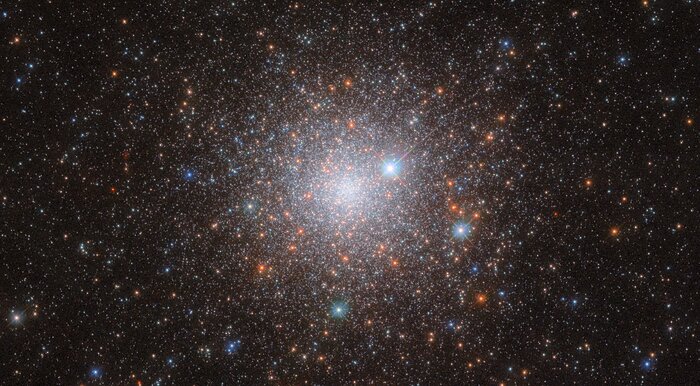 Digging up a galactic time capsuleJuly 14, 2025