
Galaxies
Gravitational Wave Source in NGC 4993
October 16, 2017 · NASA · GRB170817A - NGC 4993 · Hydra
Zoom to full resolution See where it is in the 3D sky Original on NASA ↗
On August 17, 2017, the Laser Interferometer Gravitational-Wave Observatory detected gravitational waves from a neutron star collision. Within 12 hours, observatories had identified the source of the event within the galaxy NGC 4993, shown in this Hubble Space Telescope image, and located an associated stellar flare called a kilonova. Hubble observed that flare of light fade over the course of 6 days, as shown in these observations taken on August 22, 26, and 28 (insets).
About the colours
This image is a composite of separate exposures made by the WFC3 instrument on the Hubble Space Telescope using two different cameras and filters isolating the light of specific elements or of specific broad wavelength ranges. The color arises by assigning different hues (colors), to each monochromatic image. In this case, the colors are: blue WFC3/UVIS F606W, green WFC3/IR F110W, orange/red: WFC3/IR F160W.
About the data
Data were provided by the HST proposals 14840 (A. Bellini, P.I.), 14804 (A. Levan, P.I.), 14771 (N. Tanvir, P.I.)
More from Hydra and nearby
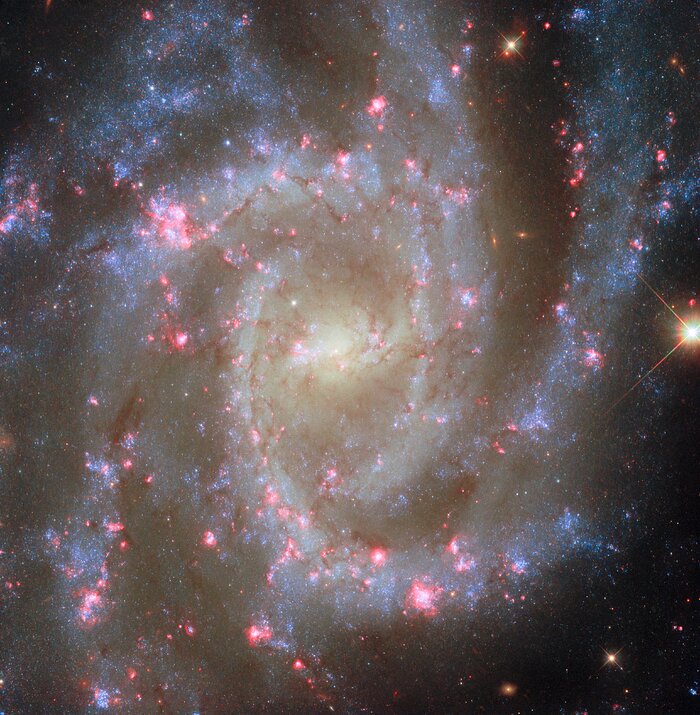 Noteworthy nearby spiralAugust 18, 2025
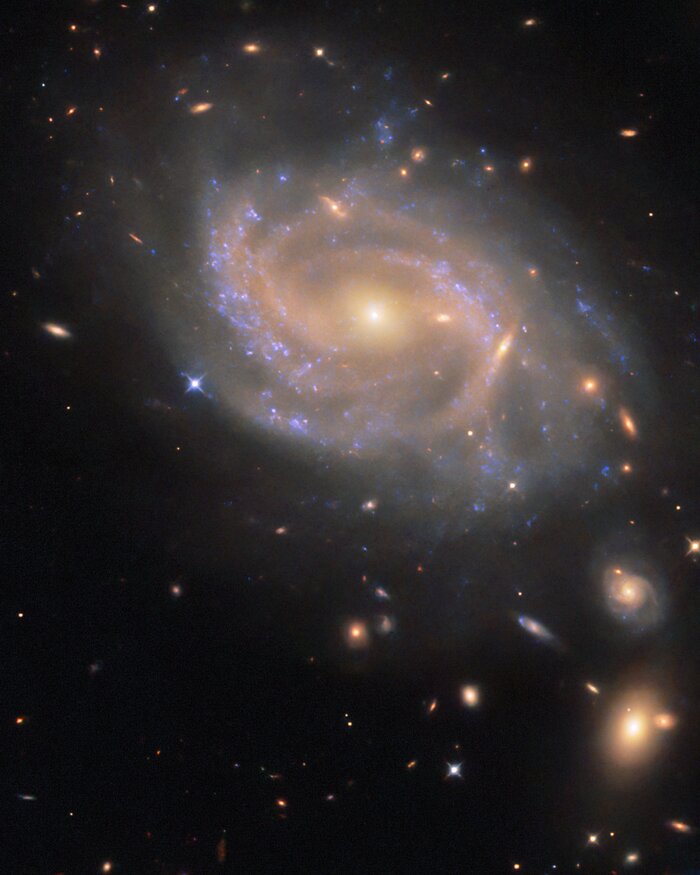 Swirling spiral in HydraJuly 21, 2025
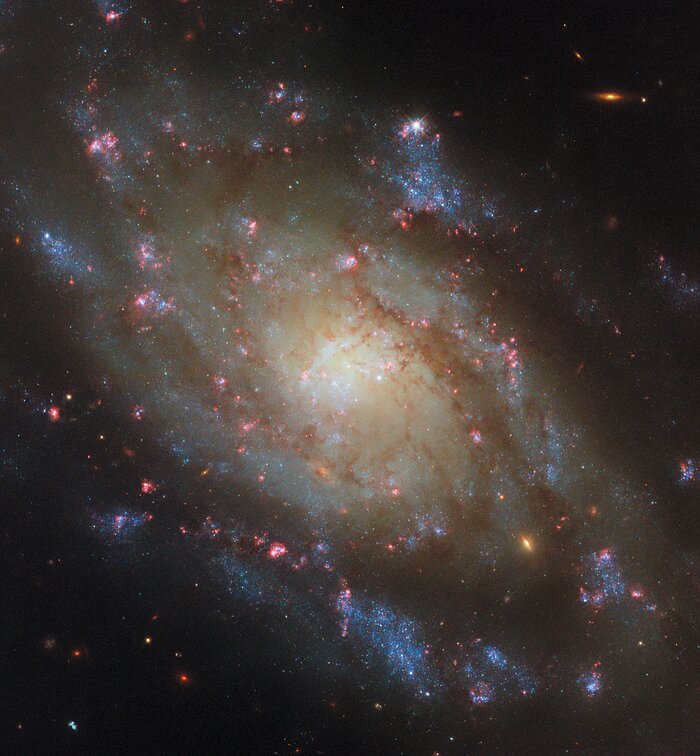 A spiral of the water snakeMarch 3, 2025
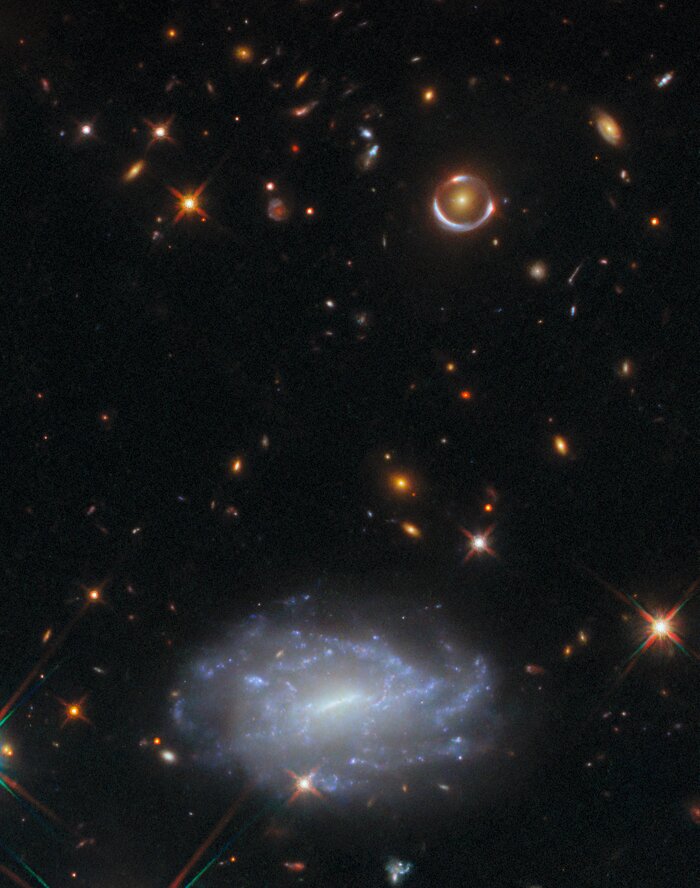 Ringing in the new yearJanuary 6, 2025
 Sighting forbidden lightDecember 18, 2023
TW Hydrae DiskMay 4, 2023
“Peekaboo” Dwarf Galaxy HIPASS J1131–31December 6, 2022
Pull-out: “Peekaboo” Dwarf Galaxy HIPASS J1131–31December 6, 2022