
Exoplanets
Model of Fomalhaut b Dust Cloud
April 20, 2020 · NASA · Piscis Austrinus
Zoom to full resolution See where it is in the 3D sky Original on NASA ↗
Hubble Captures Protoplanetary Collision in the Fomalhaut Star System
This diagram simulates what astronomers, studying Hubble Space Telescope observations, taken over several years, consider evidence for the first-ever detection of the aftermath of a titanic planetary collision in another star system. The color-tinted Hubble image on the left is of a vast ring of icy debris encircling the star Fomalhaut, located 25 light-years away. The star is so brilliant that a black occulting disk is used to block out its glare so that the dust ring can be photographed. In 2008, astronomers saw what they thought was the first direct image of a planet orbiting far from the star. However, by 2014, the planet candidate faded below Hubble's detection. The best interpretation is that the object wasn't ever a fully formed planet at all, but an expanding cloud of dust from a collision between two minor bodies, each about 125 miles across. The diagram at the right is based on a simulation of the expanding and fading cloud. The cloud, made of very fine dust particles, is currently estimated to be over 200 million miles across. Smashups like this are estimated to happen around Fomalhaut once every 200,000 years. Therefore, Hubble was looking at the right place at the right time to capture this transient event.
About the colours
This image is a composite of many separate exposures made by the STIS instrument on the Hubble Space Telescope. This image was originally black and white and recorded only overall brightness. These brightness values were translated into a range of reddish hues. Such color "maps" can be useful in helping to distinguish subtly varying brightness in an image. Red: STIS/CCD.
About the data
This image was created from HST data from proposals 10390 , 10598 , 11818, and 12576 ; PI: P. Kalas (University of California, Berkeley).
More Hubble images of Fomalhaut b
Illustration of Collision of Protoplanetary Bodies in the Fomalhaut Star SystemApril 20, 2020
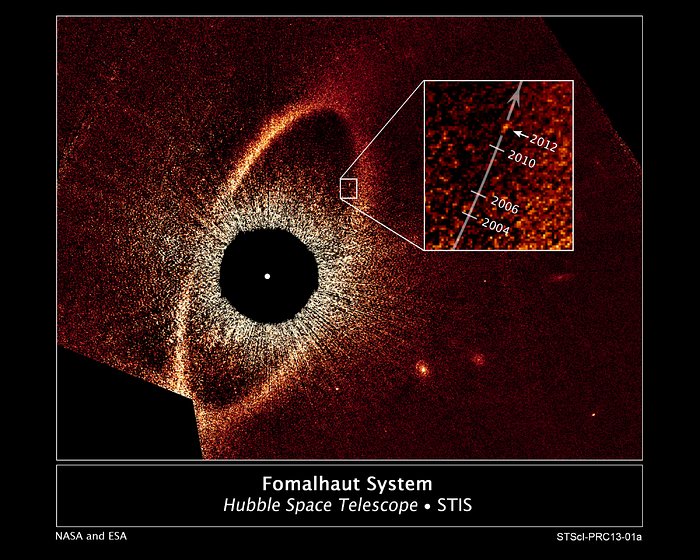 Rogue planetary orbit for Fomalhaut bJanuary 22, 2013
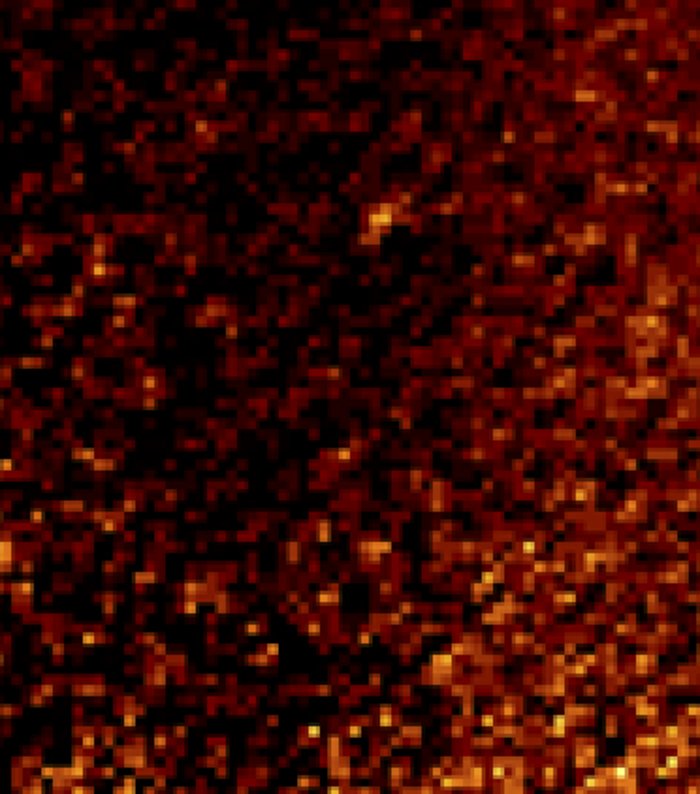 Fomalhaut b in 2012January 22, 2013
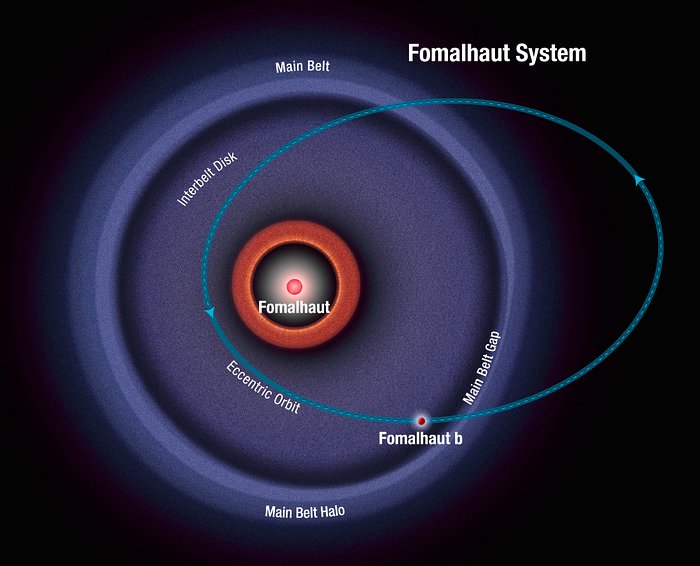 Schematic of Fomalhaut systemJanuary 22, 2013
Fomalhaut b 2012January 8, 2013
HST ACS/HRC Wide View of Fomalhaut b Planet in 2004 and 2006November 13, 2008
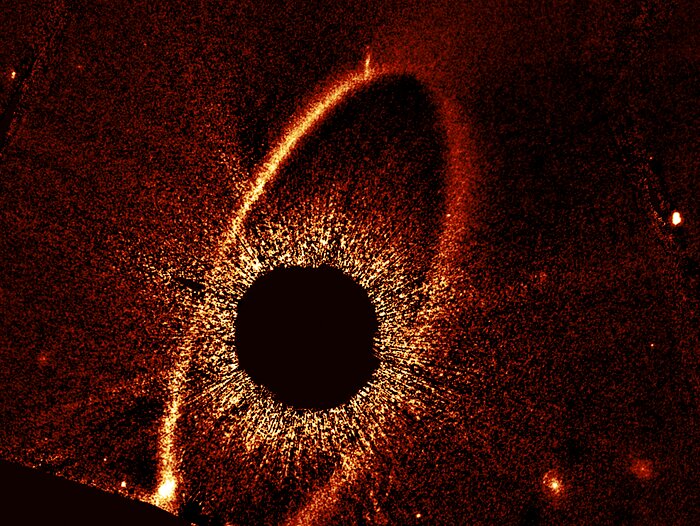 Fomalhaut cs1 and cs2 (clean image)December 18, 2025
 Fomalhaut cs2December 18, 2025