
Black holes
Crop of the GNz7q in the Hubble GOODS-North field
April 13, 2022 · NASA · GOODS North Field · Ursa Major
Zoom to full resolution See where it is in the 3D sky Original on NASA ↗
An international team of astronomers using archival data from NASA's Hubble Space Telescope and other space- and ground-based observatories have discovered a unique object in the distant universe that is a crucial link between young star-forming galaxies and the earliest supermassive black holes. This object is the first of its kind to be discovered when the universe was only 750 million years old. It had been lurking unnoticed in one of the best-studied areas of the night sky. The object, which is referred to as GNz7q, is the red dot in the center of the image of the Hubble Great Observatories Origins Deep Survey-North (GOODS-North).
About the colours
The GOODS North Field image includes exposures acquired by the ACS and WFC3 instruments on the Hubble Space Telescope. Several filters were used to sample broad wavelength ranges. The color results from assigning different hues (colors) to each monochromatic (grayscale) image associated with an individual filter. In this case, the assigned colors are: Green: F814W (I) + F850LP (z) Red: F125W (J) + F160W (H)
More Hubble images of GOODS North Field
 Hubble contributes to painting a picture of the evolving UniverseAugust 20, 2018
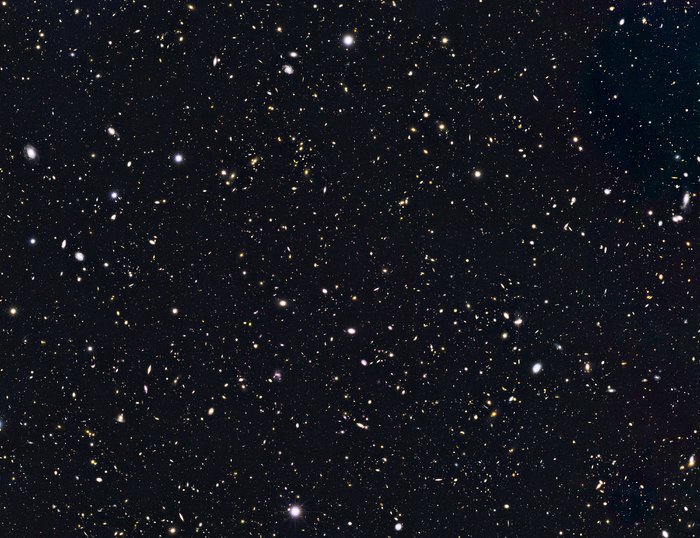 The Hubble GOODS North field (GOODS-N)August 27, 2014
 Distant galaxies in the GOODS North surveyJanuary 8, 2014
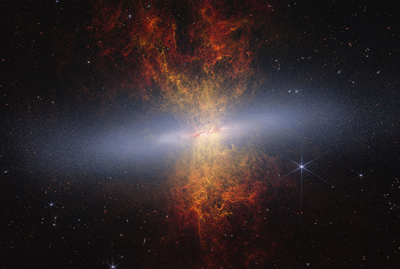 M82 Cigar Galaxy (Webb + Hubble)June 23, 2026
 Cloud 9, Starless Gas CloudJanuary 5, 2026
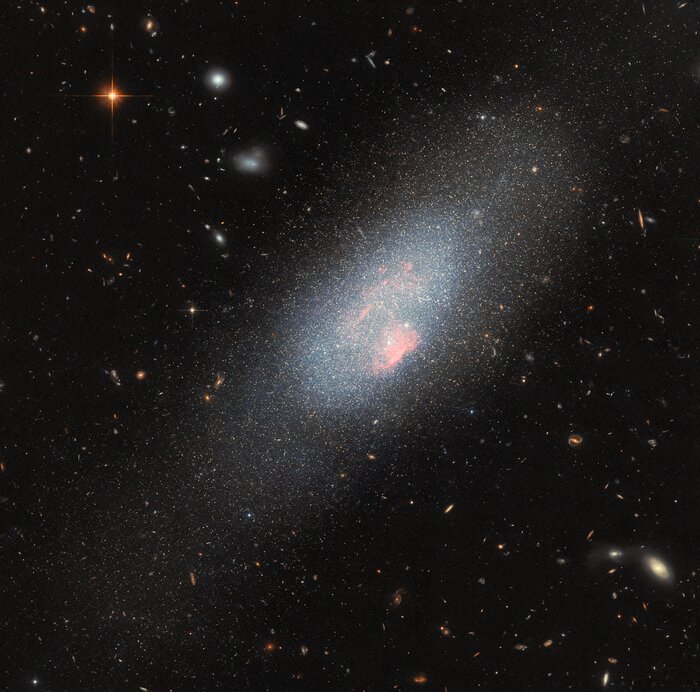 Massive stars make their markDecember 8, 2025
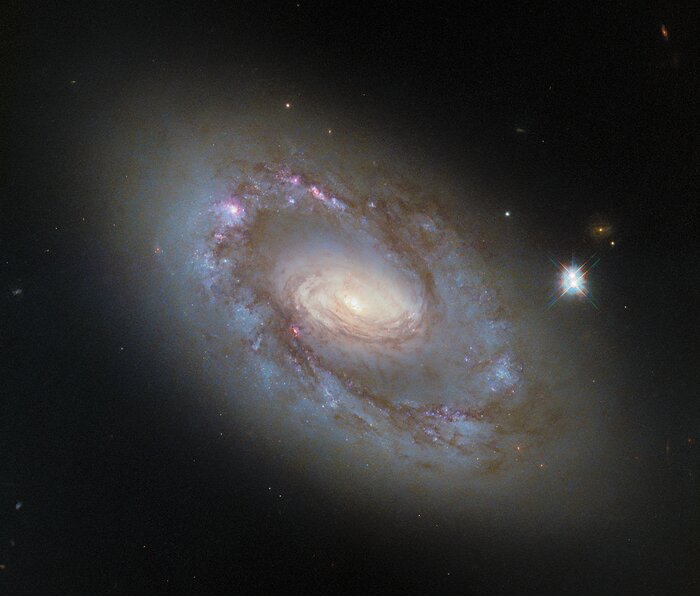 Revisiting an unusual spiralNovember 3, 2025
 The smouldering heart of a celestial cigarSeptember 15, 2025