Black holes
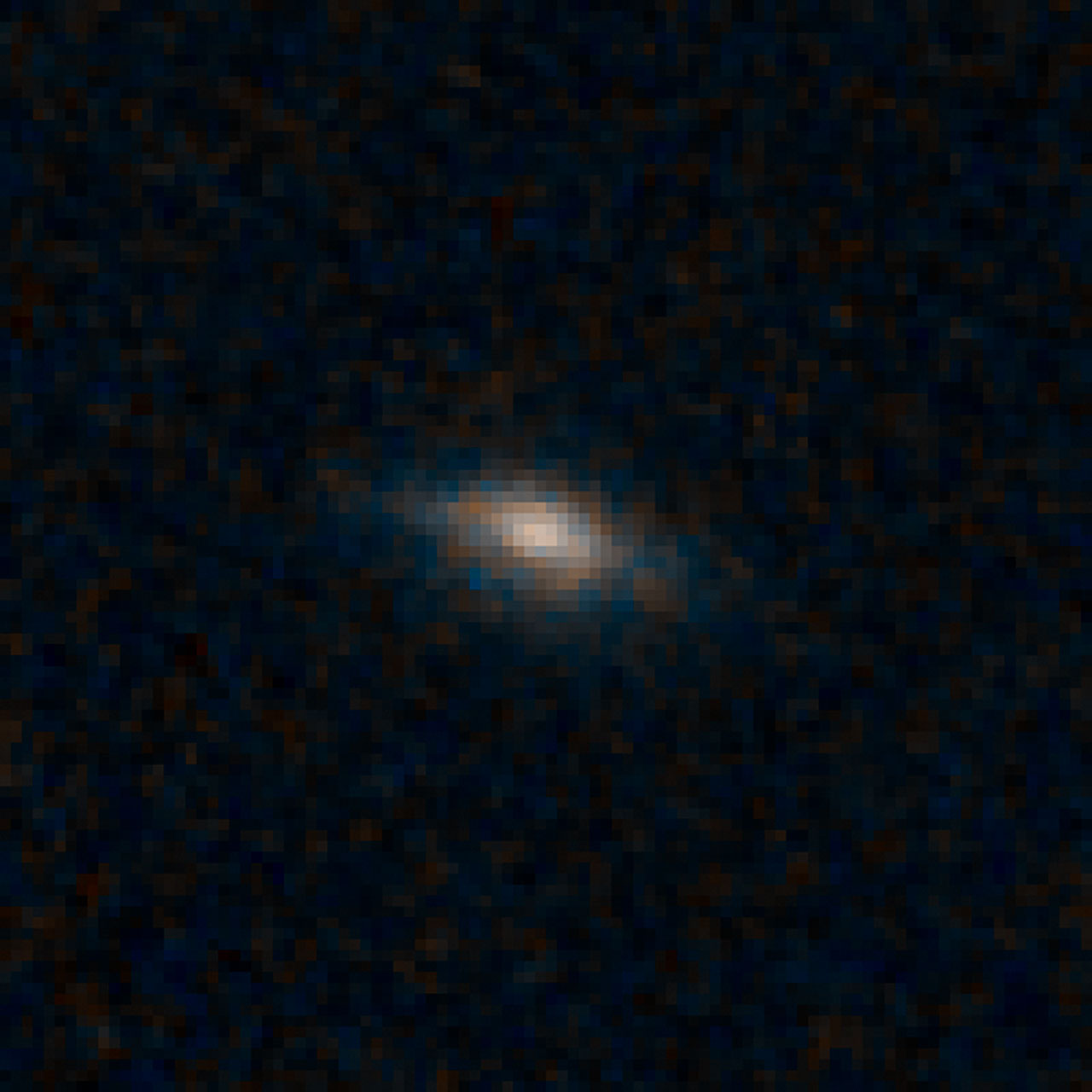
Sample galaxy 36721
June 27, 2012 · ESA/Hubble · Quasars · Fornax
Zoom to full resolution See where it is in the 3D sky Original on ESA/Hubble ↗
Black holes in the early universe needed a few snacks rather than one giant meal to fuel their quasars and help them grow, a new study shows. Quasars are the brilliant beacons of light that are powered by black holes feasting on captured material, and in the process, heating some of the matter to millions of degrees. The brightest quasars reside in galaxies distorted by collisions with other galaxies. These encounters send lots of gas and dust into the gravitational whirlpool of hungry black holes. Now, however, astronomers are uncovering an underlying population of fainter quasars that thrive in normal-looking spiral galaxies. They are triggered by black holes snacking on such tasty treats as a batch of gas or the occasional small satellite galaxy.
More Hubble images of Quasars
 Sample galaxy 29263June 27, 2012
 Sample galaxy 25783June 27, 2012
 Galaxy MXDFz4.4 (Hubble and Webb Image)June 23, 2026
Supermassive Black Holes in Hubble Ultra Deep FieldSeptember 17, 2024
 Same galaxy, different filtersNovember 13, 2023
 Hubble Spies a Long-Armed GalaxyDecember 26, 2022
 Eye of the GalaxyMarch 14, 2022
 One of a PairNovember 29, 2021