
Black holes
Markarian 231, host galaxy of double black hole
August 28, 2015 · ESA/Hubble · Ursa Major
Zoom to full resolution See where it is in the 3D sky Original on ESA/Hubble ↗
This Hubble Space Telescope image reveals a bright starlike glow in the center of the interacting galaxy Markarian 231, the nearest quasar to Earth. Located 600 million light-years away, we are seeing the galaxy as it looked before multicelled life first appeared on Earth. Quasars are powered by a central black hole that heats the gas around it to unleash tremendous amounts of energy. Hubble spectroscopic observations infer the presence of two supermassive black holes whirling around each other. Because such a dynamic-duo pair are found in the nearest quasar, it would imply that many quasars host binary-black-hole systems. It would be a natural result of a galaxy merger.
More Hubble images of Markarian 231
 Artist's concept of double black holeAugust 28, 2015
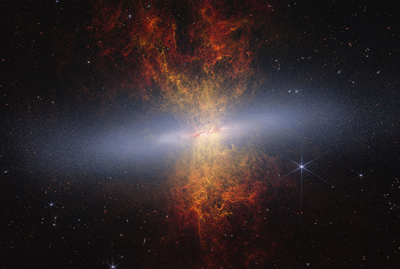 M82 Cigar Galaxy (Webb + Hubble)June 23, 2026
 Cloud 9, Starless Gas CloudJanuary 5, 2026
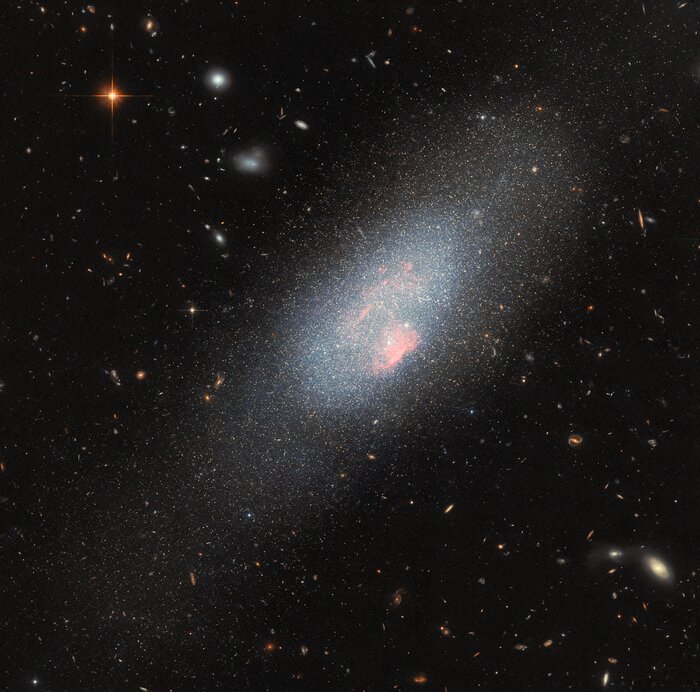 Massive stars make their markDecember 8, 2025
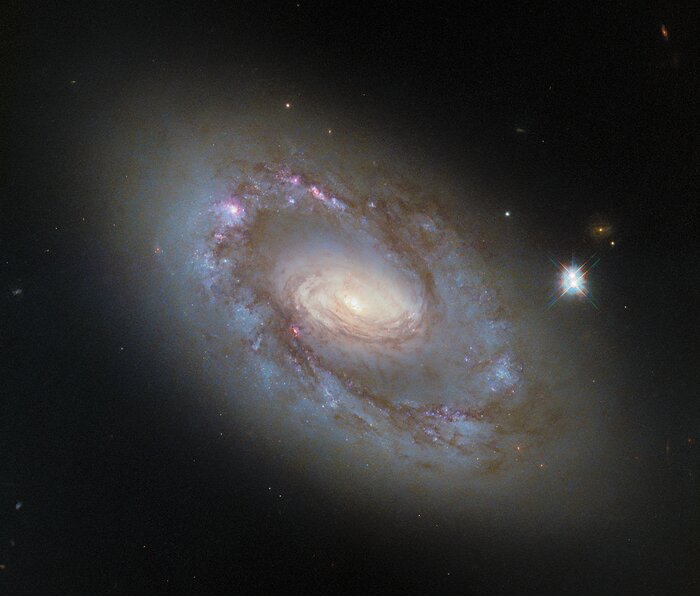 Revisiting an unusual spiralNovember 3, 2025
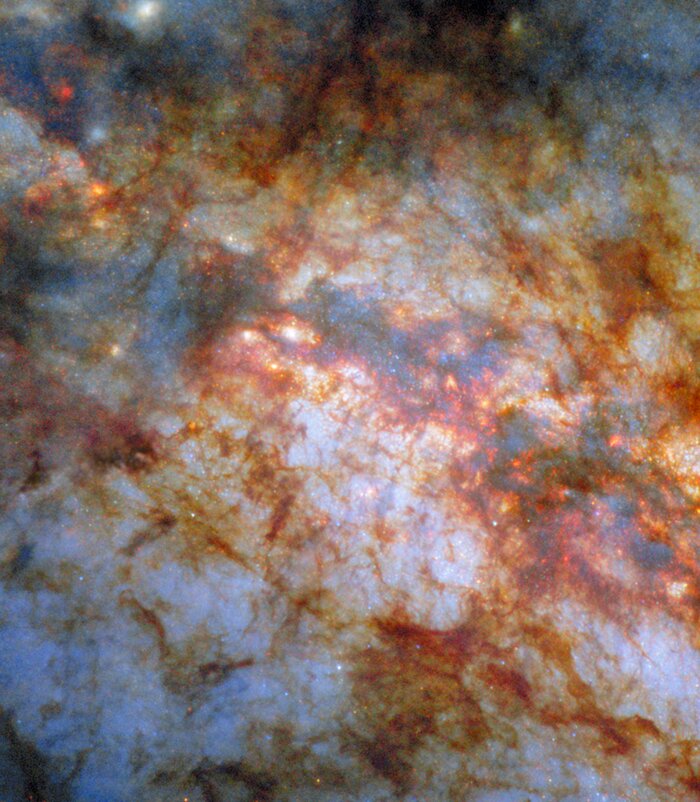 The smouldering heart of a celestial cigarSeptember 15, 2025
 Stirring the interstellar soupJune 9, 2025
 A spiral hiding an impostorFebruary 17, 2025